Most Animal Research Studies May Not Avoid Key Biases

© Armin Rodler/Flickr (CC BY-NC 2.0)

© Armin Rodler/Flickr (CC BY-NC 2.0)

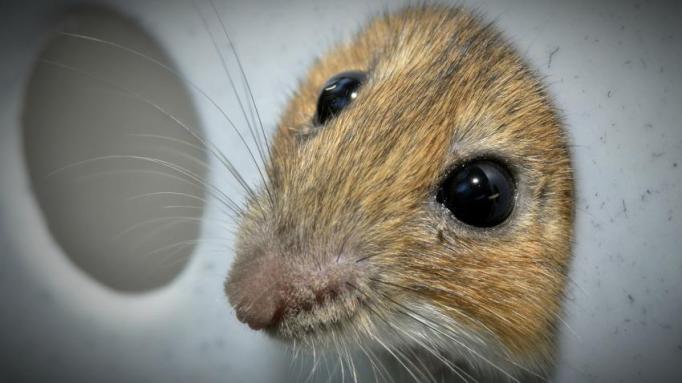
A recent article in Science Magazine reveals that the majority of animal research studies are not protected from the kinds of biases that are routinely guarded against in human research, thereby often leading to misleading results. For example, a large number of seemingly successful animal studies reported on in scientific journals are, in reality, either impossible to replicate in larger animal studies and/or in human clinical trials. This means, in turn, that many drugs tested on animals may appear to be much more effective for humans than they actually are.

Neurologist Malcolm MacLeod of the Centre for Clinical Brain Sciences (University of Edinburgh) conducted an analysis of 2500 journal articles and discovered that that the bulk of animal studies on drugs for the treatment of eight human diseases failed to adopt and/or address their implementation (or lack thereof) of four essential measures required to prevent the presence of biases in research: randomization (to indicate that both the random and control groups are not manipulated to produce desired results); blinding (so that the researchers do not know what animal(s) underwent what procedure); calculation of sample size in advance (to prevent accumulation of data until desired outcome is achieved); and statement of conflict of interest(s).

These measures are standard practice in human research but are not as yet required in animal research, which suggests that a double standard is in place and that animal experiments are not subject to the same degree of scrutiny as human clinical trials.

Click here to read the article in its entirety.

‘Less meat per day keeps emissions at bay’

Photo: Stephanie Nijhuis

Photo: Stephanie Nijhuis

Last Friday, The Journal from Queen’s University released a letter stressing meat’s contribution to climate change.

When you’re deciding whether or not to shell out an extra dollar to add bacon to your burger, you’re making a choice that affects more than just your wallet. You’re deciding whether or not to support a system that systematically destroys our ecosystems.

The letter was signed by Kathleen Houlahan Chayer, a fourth-year Environmental Science major and the Chair of Sustainability for the Society of Conservation Biology, Kingston Chapter.

Read the entire piece here.

On the same topic, read the report “Changing Climate, Changing Diets: Pathways to Lower Meat Consumption” from The Chatham House (November 2015).

Animals in Science Policy Institute

Animals in Science Policy Institute - homepage

Great news to launch the holidays and new year!

We have an important development to report concerning animals used in scientific research, testing and education in Canada. At long last, Canada has an independent body to advocate for these animals. Last week marked the launch of the Animals in Science Policy Institute based in Vancouver, under the direction of Dr. Elisabeth Ormandy. (Our readers may remember Dr.Ormandy as a recent participant in our Hidden Costs/ Hidden Potential poster campaign. She was also a speaker at the 2014 Queen’s conference on “Thinking Outside the Cage: Towards a Non-Speciesist Paradigm for Scientific Research”. The conference report is available here.)

AiSPI envisions “a society where the public ethic, and technological advancements and global communication strategies in the scientific community have made the use of nonhuman animals in science obsolete“. The Institute’s mandate is to:

  • conduct research projects into the efficacy of non-animal alternatives
  • provide up to date resources and information about non-animal alternatives
  • collaborate with stakeholders in science and policy
  • liaise with researchers, governing bodies and other decision-makers about the importance of non-animal alternatives
  • encourage transparency and meaningful public engagement about the use of animals in research, testing and teaching in Canada

Check out AiSPI’s informative and up-to-date website. And read about their recently completed project on “Non-animal alternatives in UBC undergraduate teaching“, and their current project on “High School Dissection“.

Bravo to our Vancouver colleagues!

Raising the Bar in the Justification of Animal Research

experimento-raton

A recent paper in Journal of Animal Ethics provides a detailed internal critique of the ethical decision-making framework of Animal Ethics Committees (AECs), such as the one at Queen’s which reviews and approves animal research protocols for all teaching and research uses of animals. Animal researchers typically use a utilitarian framework for rationalizing the use of animals in (harmful, non-therapeutic) research. This framework has been widely criticized from two broad approaches. First, most moral philosophers consider a utilitarian cost-benefit analysis to be a completely inadequate approach for ethical decision-making that sacrifices individuals’ basic interests (e.g. their interest in not being deliberately confined, harmed or killed). When it comes to human research subjects, we don’t think that it’s okay to harm or kill one human in order to search for a disease cure that might benefit thousands or even millions of other humans. When doctors sacrifice human research subjects in this way we consider them criminals guilty of violating fundamental rights. This is an external critique of the utilitarian research framework used to rationalize animal experimentation.

In “Raising the Bar in the Justification of Animal Research”, Elisa Galgut provides in internal critique of the utilitarian framework. In other words, she takes animal researchers at their word when they say they apply utilitarian ethical principles. Then she analyzes whether or not researchers in fact live up to the ethical requirements of the utilitarian approach they espouse. They do not. Even on their own (inadequate) criteria, most of the animal research they conduct is unethical.

Here is the abstract for Galgut’s paper:

Animal ethics committees (AECs) appeal to utilitarian principles in their justification of animal experiments. Although AECs do not grant rights to animals, they do accept that animals have moral standing and should not be unnecessarily harmed. Although many appeal to utilitarian arguments in the justification of animal experiments, I argue that AECs routinely fall short of the requirements needed for such justification in a variety of ways. I argue that taking the moral status of animals seriously – even if this falls short of granting rights to animals – should lead to a thorough revision or complete elimination of many of the current practices in animal experimentation.