Book Review: ‘Humane Education’ by Helena Pedersen

Humane Education: Animals and Alternatives in Laboratory Classes. Aspects, Attitudes and Implications by Helena Pedersen

A Book Review by Tracey Hamilton


Pedersen - Humane EducationHumane Education by Dr. Helena Pedersen, an accomplished author and researcher at Malmo University in Sweden, is an excellent resource for educators and students alike, as it explores animal experimentation as a teaching and learning method by presenting an historical overview of the practice and a theoretical analysis from educational perspectives, student perspectives, and animal and sustainability perspectives. Pedersen adds to this study many personal stories through direct quotes from those who support and those who oppose the use of dissection and vivisection in education in order to give the reader a solid background from which to understand the importance of considering replacing animals with alternative methods for educational purposes. Easy to read and comprehend, this book is accessible to any person who finds themselves questioning the ethics and function of animal use in education. This book can help students to know they are not alone and encourage them to voice their concerns about performing dissections and vivisections, as it takes much courage and effort to conscientiously object to this common practice. It can also aid educators in not only understanding students who are opposed to using animals as learning tools, but also in deciding whether or not to offer alternatives, such as interactive physical models, CD ROMs, and videos, in their classrooms.
Continue Reading

Misleading Information Can Be Worse than No Information

Animal experimentation is often presented by its proponents as a necessity for securing human health that has no drawbacks: it can only help, it is said. But it is becoming increasingly known that this picture is inaccurate, as animal experimentation hurts humans in many different ways: by providing misleading results in safety studies (given the differences between human diseases and nonhuman diseases and each species’ physiology), by causing potential abandonment of useful medical treatments and by directing resources away from more effective testing methods. In other words, there is a critical, and often neglected, human cost when we choose to use animals as models in health sciences.

According to neurologist Aysha Akhtar, these costs even outweigh the potential benefits, as it is discussed in her article “The Flaws and Human Harms of Animal Experimentation” published last fall in the Cambridge Quaterly of Healthcare Ethics:

Abstract: Nonhuman animal (“animal”) experimentation is typically defended by arguments that it is reliable, that animals provide sufficiently good models of human biology and diseases to yield relevant information, and that, consequently, its use provides major human health benefits. I demonstrate that a growing body of scientific literature critically assessing the validity of animal experimentation generally (and animal modeling specifically) raises important concerns about its reliability and predictive value for human outcomes and for understanding human physiology. The unreliability of animal experimentation across a wide range of areas undermines scientific arguments in favor of the practice. Additionally, I show how animal experimentation often significantly harms humans through misleading safety studies, potential abandonment of effective therapeutics, and direction of resources away from more effective testing methods. The resulting evidence suggests that the collective harms and costs to humans from animal experimentation outweigh potential benefits and that resources would be better invested in developing human-based testing methods.

In sum, writes the author, “misleading information can be worse than no information from animal tests” (413).

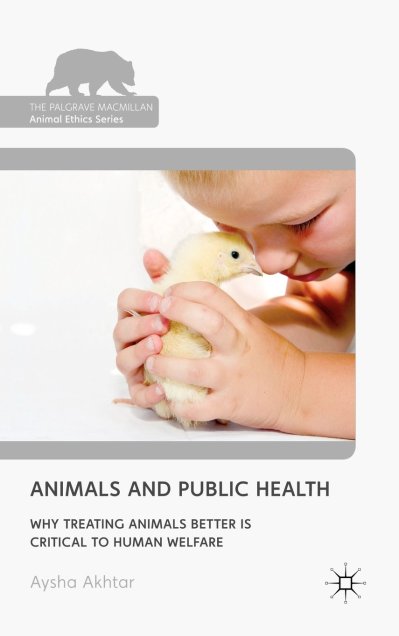
Dr Akhtar has also published the book Animals and Public Health: Why Treating Animals Better is Critical to Human Welfare, in 2012, that explores in depth similar issues:

Akhtar - Animals and Publich Health

The Emperor Has No Clothes

About-CCAC

Image taken from the CCAC’s website.

A ground breaking article by Professor Laura Janara (University of British Columbia) has recently been published in the peer-reviewed Canadian Journal of Political Science. “Human-Animal Governance and University Practice in Canada” is essential reading for anyone interested in policies relating to the use of nonhuman animals for research and education in Canadian universities. Dr. Janara systematically reviews the history, practice and discourse of the Canadian Council on Animal Care (CCAC), the primary administrative body that oversees animal research. Far from offering protection to animals, Dr. Janara argues, “CCAC administrative oversight helps depoliticize and legitimate this culture of causing pain, suffering and injury to nonhuman animals“(p. 9). She systematically examines the key claims of the CCAC – that it acts in the public interest, that it is democratically legitimate, and that it secures compelling ethical and scientific peer review of research and pedagogy using animals – and shows each of them to be a fallacy. Even the CCAC’s own internally-requested 2013 review of its practices was scathing, noting “significant structural deficiencies of the CCAC” and a “governance vacuum” (p. 20).

The abstract for Dr. Janara’s paper is provided below, and readers are urged to read the article in full. It should be of particular interest to members of the Queen’s community. Why? Because whenever Queen’s is asked to provide information about its animal use practices, it ritually invokes its compliance with CCAC guidelines to forestall discussion.  For example, the university web page on animal care assures readers that the role of the University Animal Care Committee is to ensure “that the highest ethical standards, as defined by the Canadian Council on Animal Care (CCAC), are observed.” (The University Animal Care Committee is the local body instituted at each university to implement CCAC guidelines, and report back to that body.)

Continue Reading