Philosophy of Captivity

Lori Gruen


Philosopher Lori Gruen from Wesleyan University is interviewed by Richard Marshall at 3am.

To quote Lori Gruen: “The magnitude of the harms done to animals is almost incomprehensible — 60 billion suffer before they are slaughtered for food in global industrial agricultural production annually and that contributes more greenhouse gas emissions than any other sector, which in turn is wreaking havoc on animal habitats on land and in the sea. When we also consider the additional threats that other animals face from human activities, it becomes clearer that the problems are structural and remedies cannot solely rely on individual tastes. But there are some really hard philosophical questions about what, if anything, individuals can do to help curtail these harms.”

Read the full interview here.


India Bans Animal Dissection In Universities

1024px-Wistar_rat

Image taken from Wikipedia

Indian universities have banned animal experimentation and dissection! Students will use computer models instead, which are not only more humane, but also a more useful educative tool than animal models. The move is estimated to save 19 million animals each year.

Read the full story here 

Of Mice and Men

Photo by Alexander H. Tuttle.

Photo by Alexander H. Tuttle.

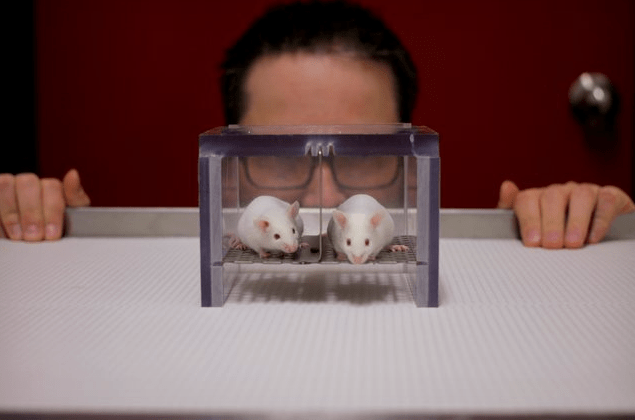
Two recent studies add to the growing scientific doubts about using animal models for biomedical research. How many millions of mice have suffered and died for nothing?

The first study, reported by The Verge, reveals that mice have a stress response when handled by men, but not women. This undermines the internal validity of almost every mouse (and probably rat) study ever conducted, because researcher gender was not controlled for in these studies, and so the differential stress effects (measured by cortisol levels, body temperature, pain response) have contaminated the findings.

The second study, reported by the New York Times and published in the Proceedings of the National Academy of Sciences, reports on the failure of mouse models for sepsis, burn and trauma research. According to the authors: “The prevailing assumption – that molecular results from current mouse models developed to mimic human diseases translate directly to human conditions – is challenged by our study…. [O]ur study supports higher priority to focus on the more complex human conditions rather than relying on mouse models to study human inflammatory diseases.”