Zoo Animals and Their Discontents

mag-06Zoo-t_CA0-master675

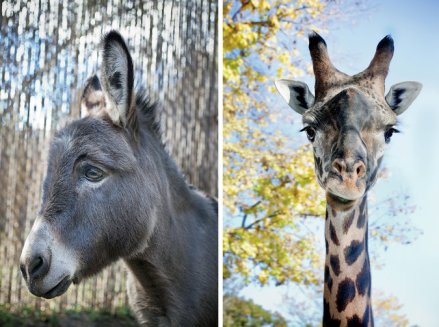
The New York Times reports on the emotional well-being of zoo animals by detailing the work of Dr. Vint Virga, a veterinarian and animal behaviorist, who treats zoo animals for psychological and behavioral ailments. Dr. Virga has “… treated severely depressed snow leopards, brown bears with obsessive-compulsive disorder and phobic zebras. ‘Scientists often say that we don’t know what animals feel because they can’t speak to us and can’t report their inner states,’ Virga told me. ‘But the thing is, they are reporting their inner states. We’re just not listening.'”

Zoos continue to stir up controversy and this powerful quote from the article helps partly to explain why:

“Still, there’s no denying the public qualms about the entire project of keeping our animal friends captive for education and profit. Consider Mali, an aging elephant at the Manila zoo who has spent most of her 40 years in what, without exaggeration, might be described as a cage, and the campaign to free her that has drawn public statements from as far afield as the morose English rocker Morrissey and the South African novelist J. M. Coetzee. Her years in the zoo are ‘a heavy sentence to bear, longer than is served by most murderers,’ wrote Coetzee, a Nobel laureate. ‘Mali has paid the penalty for not being fortunate enough to be born human.'”

Read the full article here

Also, read the Cambridge Declaration on Consciousness here.

Animal Testing, for the Benefit of Chimps?

Chimpanzee_mom_and_baby_cropped

Image taken from Wikipedia.

In 2013, the National Institute of Health vowed to stop breeding additional chimps for biomedical testing and agreed to re-home all but 50 of their current test subjects. However, some scientists argue for continued testing on chimps, not necessarily for any benefits to human, but for the sake of chimpanzees themselves. For instance, diseases like Ebola affect humans and chimps alike and according to Dr. Peter Walsh, “‘In the last 30 years, [it] has killed about a third of the world’s gorillas, and thousands of chimps, … If we don’t do something about this now, these animals are going to go extinct in the wild.'”

However, others, like Steve Ross argue that “‘If you develop a captive population, test your vaccine and the result is a vaccine that cannot be administered to wild populations and therefore doesn’t save a single chimpanzee, we’ll have done a tremendous disservice to chimpanzees as a whole.'”

Although Dr. Walsh’s proposal is problematic for various reasons, it raises interesting questions about the correct response to declining wild chimpanzee populations. If part of the justification for halting biomedical testing on captive chimpanzees was because they are *”like us”* in some morally relevant way, then is there a duty to find cures for wild apes like we do for humans?

*Note: this is not necessarily meant to support the “they are like us” argument!

Read the full story here.

Computer Software Used to Search for a Cure for Ebola

IBM_Watson

IBM Watson

Researchers at the University of Toronto are using artificial intelligence to help find a cure for Ebola. Using Canada’s largest supercomputer, researchers can analyze all existing and hypothetical treatments for a disease in order to compile data in a matter of days, instead of years. While unfortunately this process doesn’t altogether eliminate use of animal testing (which is required by law), at least it demonstrates meaningful progress in the ‘reduce’ goal of the 3Rs.

As explained in the article, “The testing of pharmaceuticals is normally a physical science – “we still have to build every prototype we test,” said Heifets, resulting in hundreds of thousands of failed experiments for each success. Chematria can do that research virtually, making it 150 times faster than conventional methods, said Heifets. The tech has been applied to malaria, leukemia and Multiple Sclerosis, but in the face of a growing pandemic, creators last week launched an Ebola project.

Read the full article here.