A New Year Launches for Queen’s Animal Defence

image

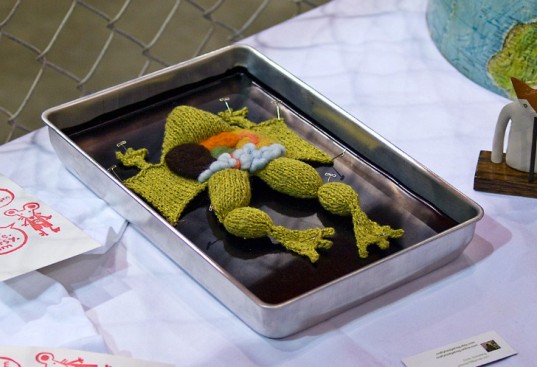
Many thanks to all the students who stopped by QAD’s table at Queen’s in the Park to learn about how to speak up for the animals at Queen’s, and how to get involved in our campaign to promote the use of alternative pedagogies and technologies that can replace the use of animals in education and biomedical research. By working together we can make Queen’s a leader in humane education and research.

A special thank you to the 100+ students who signed our petition asking Queen’s to establish a retirement and rehoming program for animals used in research experiments. Way to be an ally for animals!

Continue Reading

India Bans Animal Dissection In Universities

1024px-Wistar_rat

Image taken from Wikipedia

Indian universities have banned animal experimentation and dissection! Students will use computer models instead, which are not only more humane, but also a more useful educative tool than animal models. The move is estimated to save 19 million animals each year.

Read the full story here 

Dissection Opt-out Policies Needed for Secondary School Students

© daikiki via Creative Commons

© daikiki via Creative Commons

A recent study by Lakehead University researcher Jan Oakley highlights the need for clear dissection opt-out policies for secondary school students in Ontario. Students are often pressured into participation in dissection despite the availability of humane alternatives. Humane alternatives have been demonstrated to be as good as, or even superior to, traditional pedagogies using animals.

Here is an abstract of the paper:

This paper highlights the voices and experiences of individuals who objected to animal dissection in their high school science and biology classes. The data were collected via online surveys (n = 311), and 8 of these participants took part in more in-depth telephone interviews. Participants were former students from Ontario, Canada, who discussed their experiences with animal dissection in general, and objection to dissection in particular, if applicable. The findings reveal that students who expressed objection to dissection experienced a range of teacher responses, including pressure to participate, the request to join another group of students and watch, the choice to use a dissection alternative, warnings of compromised grades, and other responses. The study points to the importance of choice policies to ensure that dissection alternatives are available in classrooms. In this way, students can select among different options of how they would like to learn, and teachers can be prepared to accommodate those who choose not to dissect.

Citation: Oakley, J. (2013). “I Didn’t Feel Right About Animal Dissection:” Dissection Objectors Share Their Science Class Experiences. Society & Animals, 21, 360-378

See more here.

Of Mice and Men

Photo by Alexander H. Tuttle.

Photo by Alexander H. Tuttle.

Two recent studies add to the growing scientific doubts about using animal models for biomedical research. How many millions of mice have suffered and died for nothing?

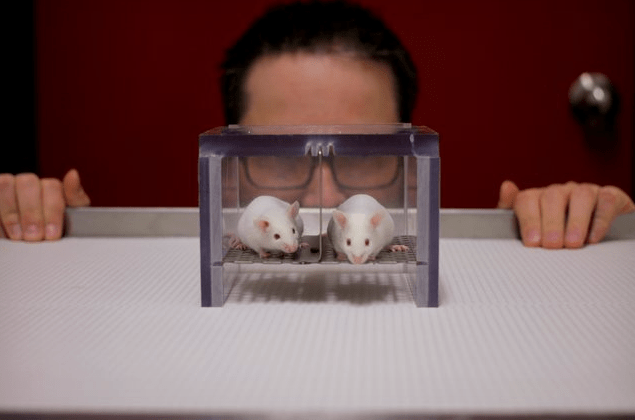
The first study, reported by The Verge, reveals that mice have a stress response when handled by men, but not women. This undermines the internal validity of almost every mouse (and probably rat) study ever conducted, because researcher gender was not controlled for in these studies, and so the differential stress effects (measured by cortisol levels, body temperature, pain response) have contaminated the findings.

The second study, reported by the New York Times and published in the Proceedings of the National Academy of Sciences, reports on the failure of mouse models for sepsis, burn and trauma research. According to the authors: “The prevailing assumption – that molecular results from current mouse models developed to mimic human diseases translate directly to human conditions – is challenged by our study…. [O]ur study supports higher priority to focus on the more complex human conditions rather than relying on mouse models to study human inflammatory diseases.”